I conducted biomedical data science research at Case Western Reserve University's Biomedical Engineering Department, working under Dr. Viswanath to develop statistical models for assessing treatment outcomes in rectal cancer patients. I independently analyzed multi-dimensional MRI and clinical data containing hundreds of imaging and clinical variables, employing and comparing various regression techniques including linear, lasso, and ridge regression to identify the most significant predictive variables for cancer tumor grade levels. Using Python (with NumPy, Matplotlib, Seaborn, Scikit-Learn, and Pandas libraries) and Stata, I developed these models and presented my findings through a comprehensive research paper.
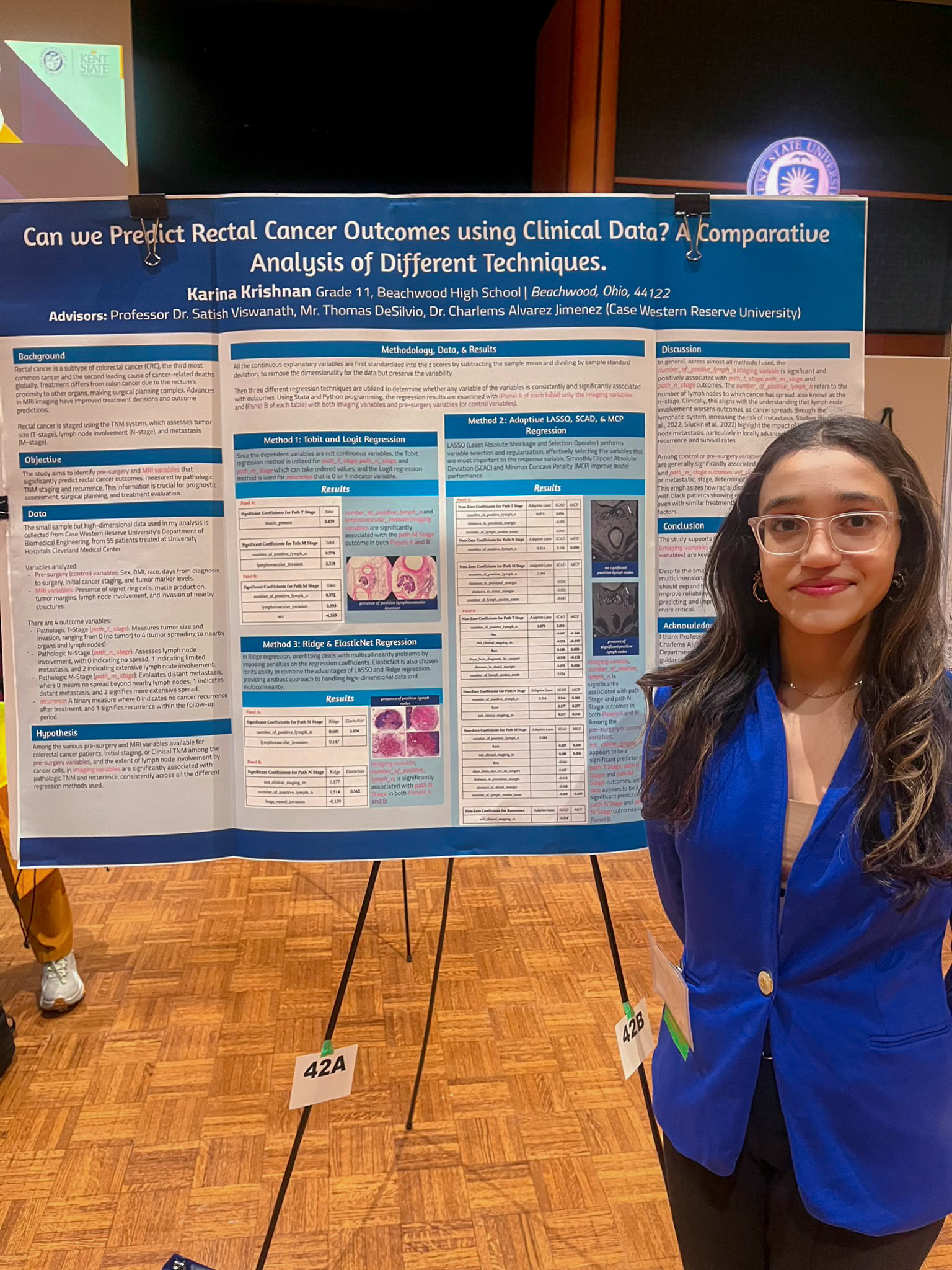
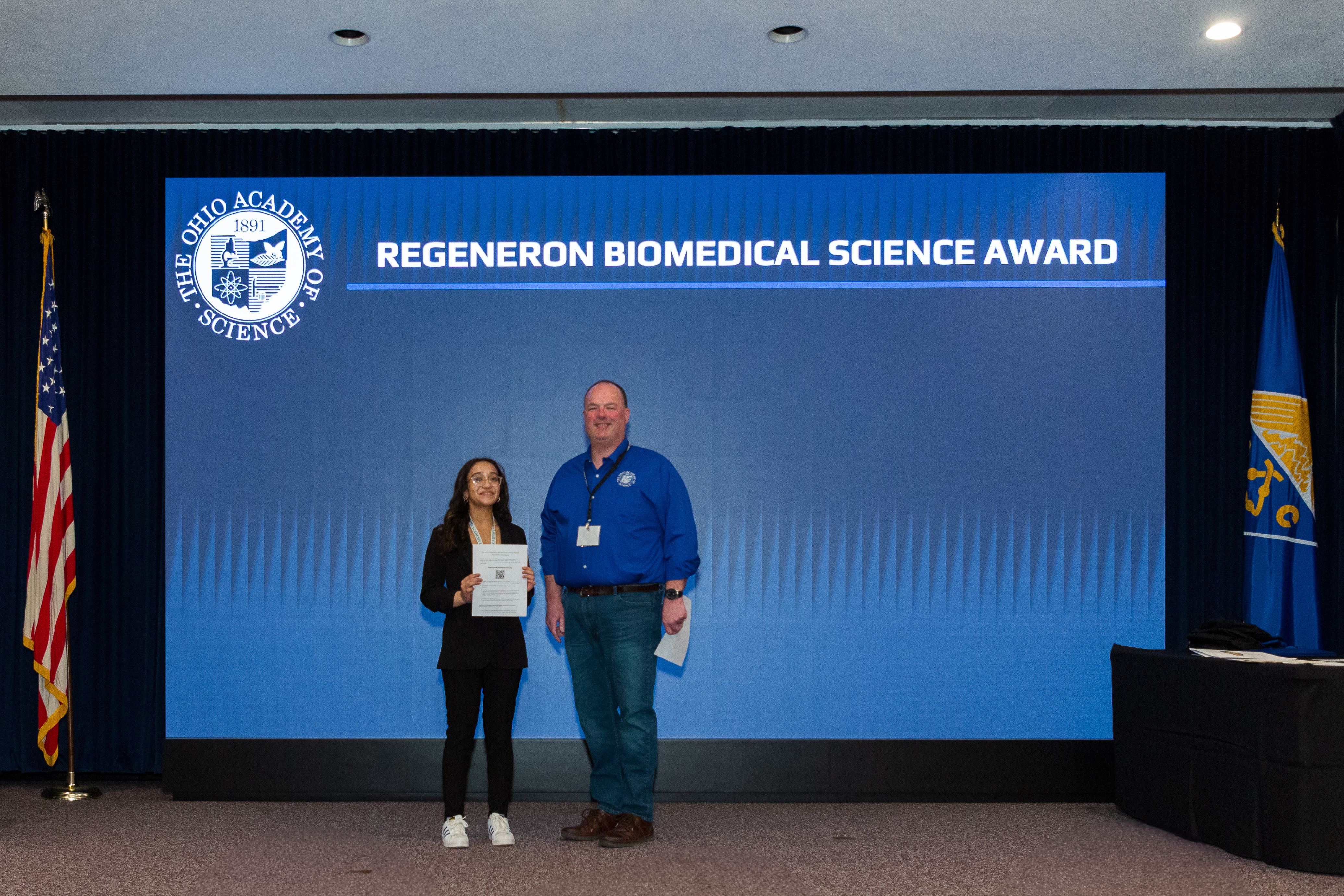
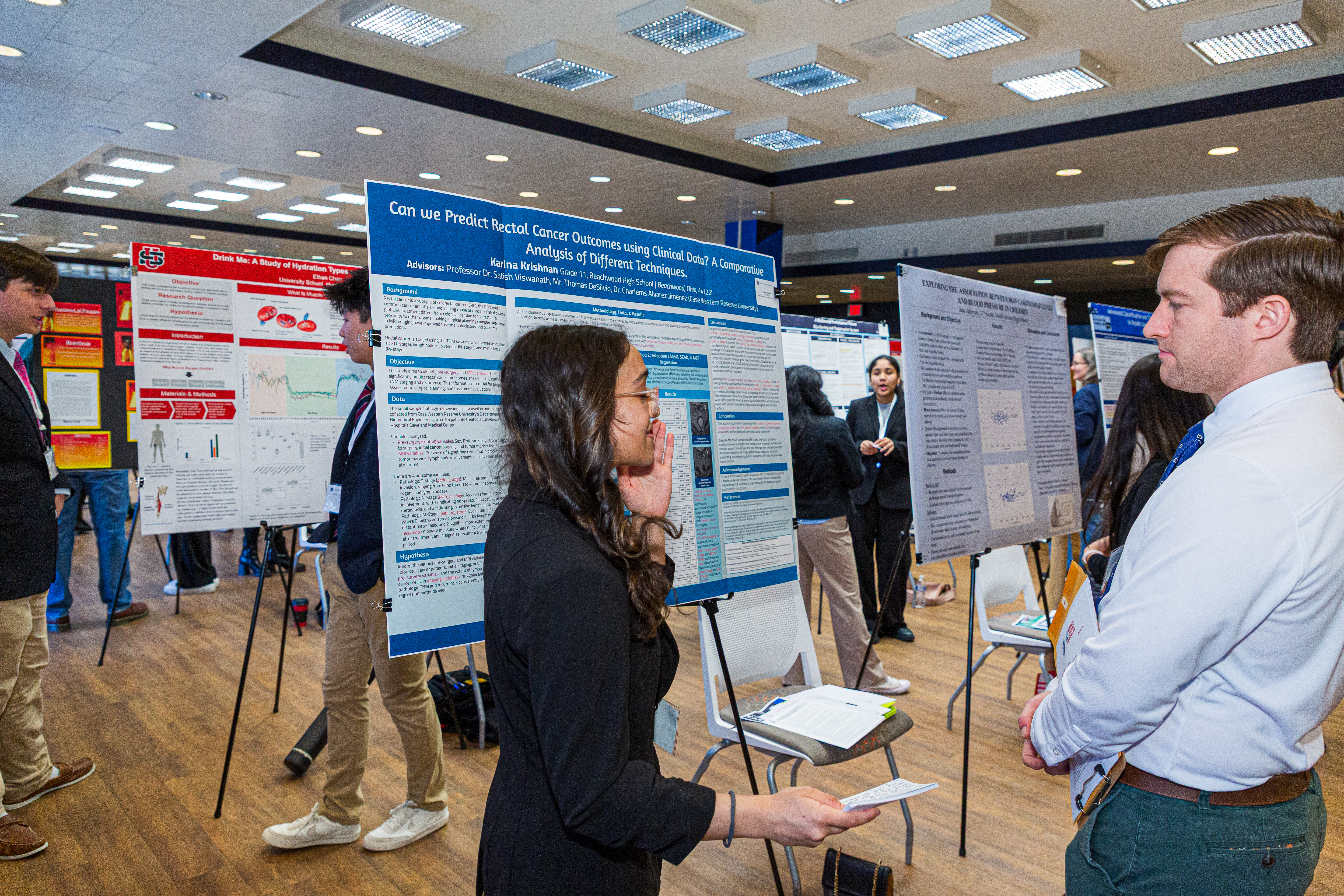
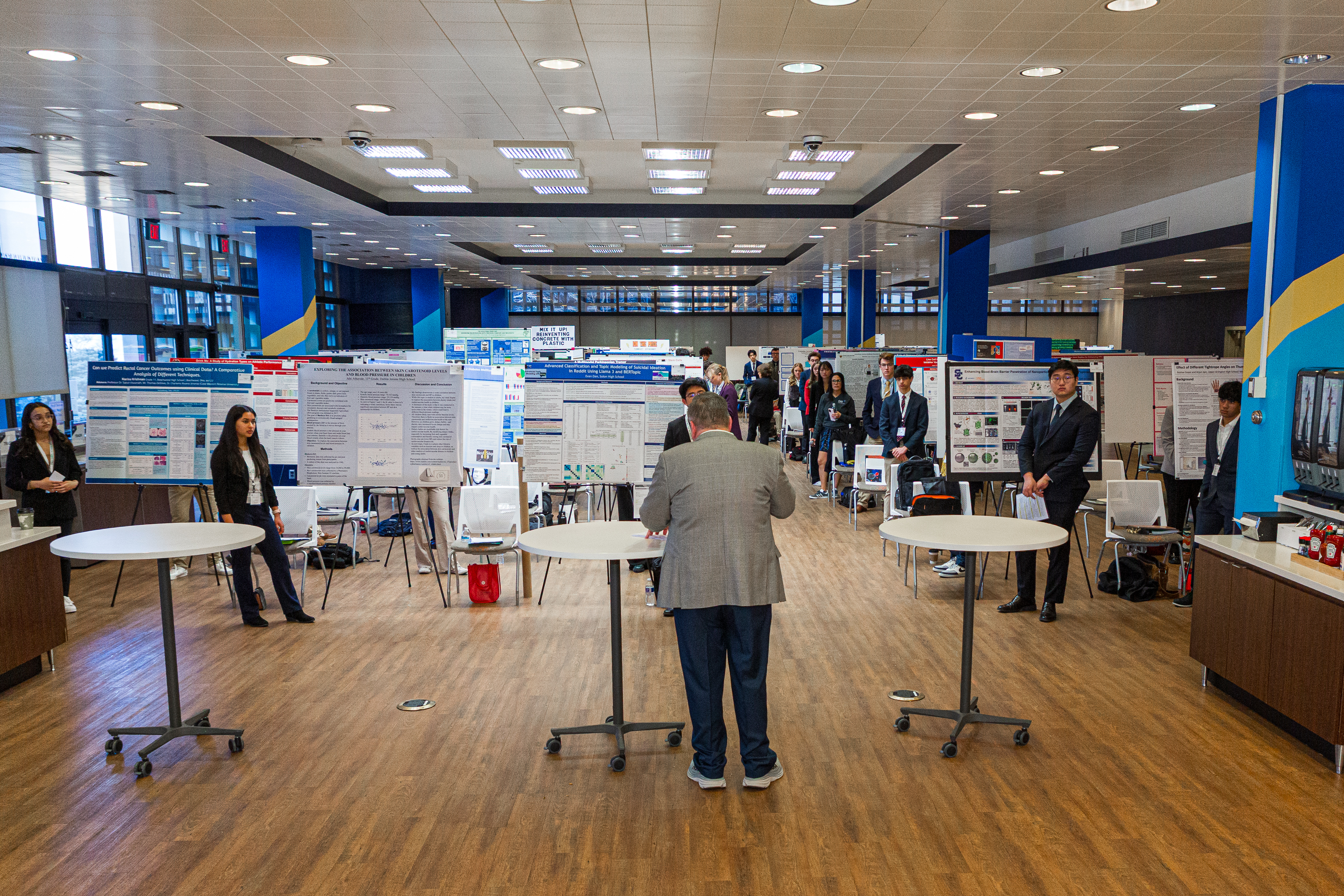
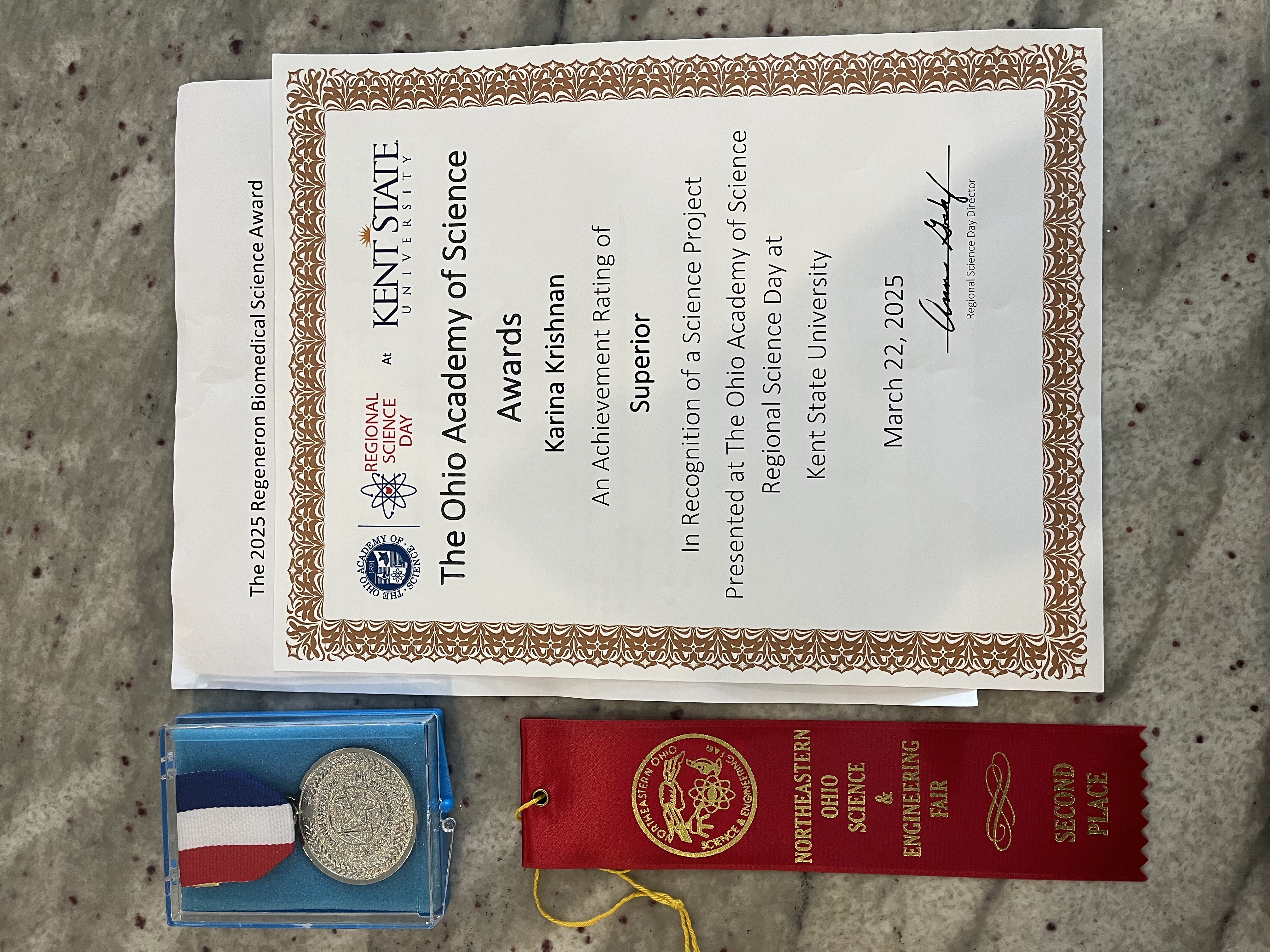
"Can we Predict Colorectal Cancer Outcomes using MRI Data? A Comparative Analysis of Different Techniques."
Research Paper
Quad Chart
Research Abstract
NEXT STEPS:
After completing an intensive two-week MathQuantum High School Fellowship run by the University of Maryland, I’m continuing my research by implementing both classical and quantum machine learning models to predict rectal cancer recurrence under the guidance of Mr. Jay Vaidya of CWRU, and Dr. Aaron Lott of UMD. I'll analyze their comparative performance, and these findings will be published and presented at the MathQuantum Annual Symposium in February (2026).
"As a continuation of her summer research through the UMD MathQuantum program, Karina is working under my mentorship to advance her project on quantum and quantum-inspired machine learning for medical diagnostics. Her current focus is on developing and evaluating hybrid quantum-classical models to classify stages of rectal cancer using sparse clinical datasets—an approach aligned with the challenges of personalized medicine. By systematically comparing quantum, quantum-inspired, and classical methods in low-data regimes, the project aims to identify performance and generalization advantages afforded by quantum kernels, variational circuits, and related techniques. The goal is not only to assess feasibility on near-term devices but also to contribute insight into how these emerging approaches might enhance decision-making in precision oncology." - Dr. Aaron Lott